
To Be or Not to Be: In the Power Business!
To be or not to be. For data center developers, that is becoming a very interesting question.
The question is not whether to be in the AI business. That decision has already been made emphatically. The question nobody envisioned is whether data center operators and owners want to develop, design, build, and operate power generation plants for their data centers.
For decades, the arrangement was refreshingly simple. Developers built data centers. Utilities supplied electricity. Alternative and backup power generators sat quietly in the corner, waiting for their one moment of relevance. Everyone knew their role, and nobody had to think too hard about it.
Then the grid stumbled and AI workloads crippled the old way of doing business.
Like all businesses that strive for fast-paced growth, waiting for a utility solution is no longer an option. Developers need power fast because the AI boom waits for no one. Today’s opportunities are now down to building self generating facilities while others are turning to independent power producers. Meanwhile, utilities are quietly asking themselves a very different question: if customers are willing to spend billions to secure electricity, why shouldn't utilities own more of that value chain themselves?
The energy renaissance isn't just changing how we generate power. It's changing who even wants the job.
Congratulations. You're Now a Power Developer.
Imagine spending years perfecting the business of building data centers, only to discover that securing electricity now requires you to develop and operate an actual power plant. That's not a pivot. That's a career change that few signed up for.
Power generation comes with a whole new job description: fuel procurement, permitting, equipment selection, maintenance, regulatory compliance, decades of operational risk. And like a server rack, a power plant has to keep working reliably, for the next twenty years or more.
So developers face a real choice: build the expertise and own the risk themselves, or find a partner willing to own it for them. Either way, the risk doesn't vanish. It just changes its address, gets repriced, and eventually lands on somebody's balance sheet.
The real question isn't who can build the power plant. The real question is who actually wants to.
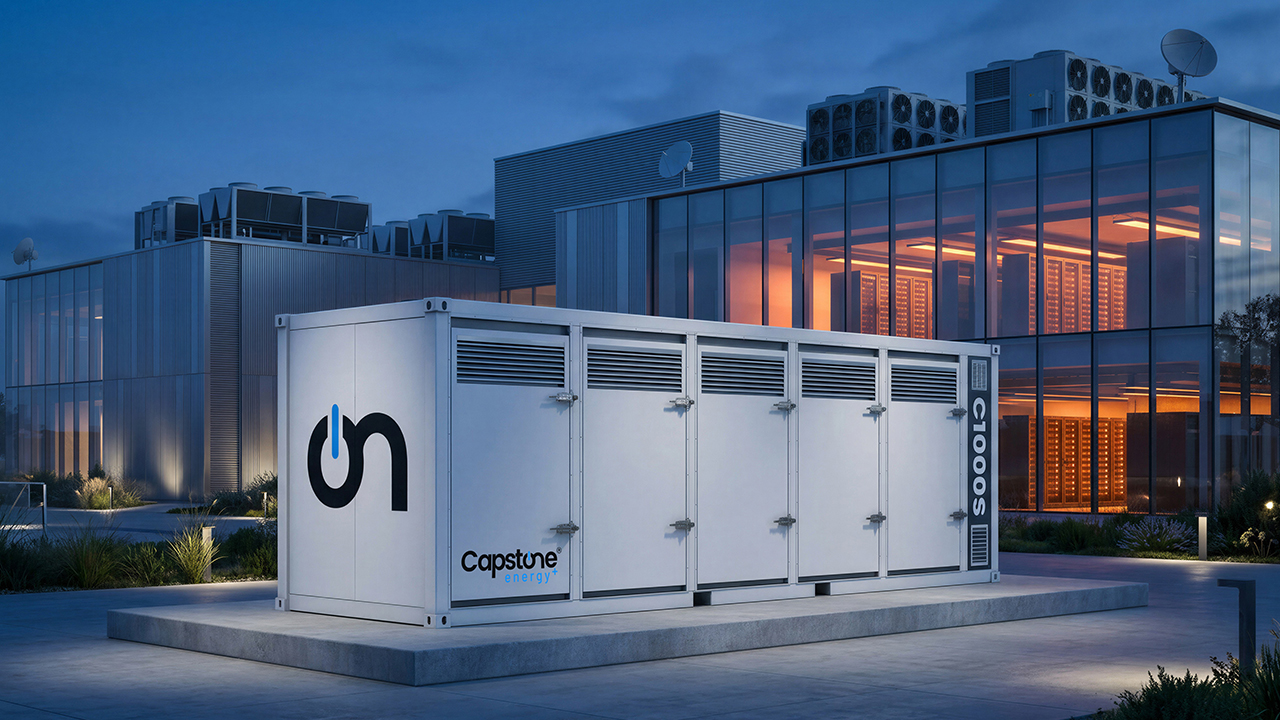
A Capstone C1000S gas turbine system positioned outside a data center,
illustrating a modular, behind-the-meter power solution that can
supply on-site electricity to support the facility’s critical loads.
Could Utilities Become the New Power Developers?
Here's where it gets genuinely interesting. Utilities already know how to generate, transmit, and distribute electricity at scale. They have the engineers, operating organizations, regulatory muscle, and capital. So why wouldn't they want a bigger seat at the AI infrastructure table?
We could see utilities expand generation businesses, spin up new subsidiaries, or partner directly with data center operators on dedicated projects. For developers, that's tempting. Most would rather focus on servers and software than fuel contracts and turbine maintenance, and there's real comfort in having an experienced utility stand behind a decades-long power commitment.
But comfort has a price tag, and it's not a small one.
Someone Has to Pay for Certainty
A utility-backed solution offers a familiar counterparty and proven expertise. It may also come with a bill nobody wants to be first to open. Have you seen how electricity costs have risen over the past 20 years?
New generation requires capital. So do transmission upgrades, interconnections, fuel infrastructure, and the redundancy that critical operations demand. Someone finances all of it, someone assumes the operating risk, and someone expects a return.
It gets even more interesting when a data center wants dedicated capacity on an accelerated timeline. Who pays for infrastructure built to serve essentially one customer? What happens if the project slips, demand underdelivers, or the customer walks away? Does that cost land on the developer, the utility, its shareholders, or every other ratepayer on the grid?
These aren't engineering questions. They're commercial and regulatory ones, and they will shape AI infrastructure economics for years. Everyone wants certainty. The conversation gets real the moment someone has to price it.
A New Role for Energy Partnerships
I don't think every developer needs to become a power company, and I don't think every utility needs to become an independent power producer. The real opportunity lies in partnerships: developers, utilities, engineering firms, energy technology providers, and independent power producers, each doing what they actually do best.
At Capstone Energy+, we see real opportunity in supporting these evolving models through modular, on-site gas turbine solutions. But technology alone doesn't answer every question. Who develops, who finances, who operates, and who owns the risk when something goes wrong still matter as much as the hardware itself. Getting those answers right, alongside the right technology, is what actually decides how fast projects move and whether the economics hold up.
The Next Power Question
The first challenge of the AI movement was simply finding enough power. The next is deciding who builds it, owns it, operates it, and stands behind it when things go wrong at 2 a.m.
Developers can become power developers. Utilities can expand their footprint. Independent power producers can step in through long-term agreements. Each path carries its own economics, its own risks, and its own headaches.
And while the industry argues over who should own the power plant, GPU’s still need its lifeblood: electricity and cooling.
To be or not to be in the power business? That is the question. But nobody remembers who built the power plant. They remember when the power went out.